
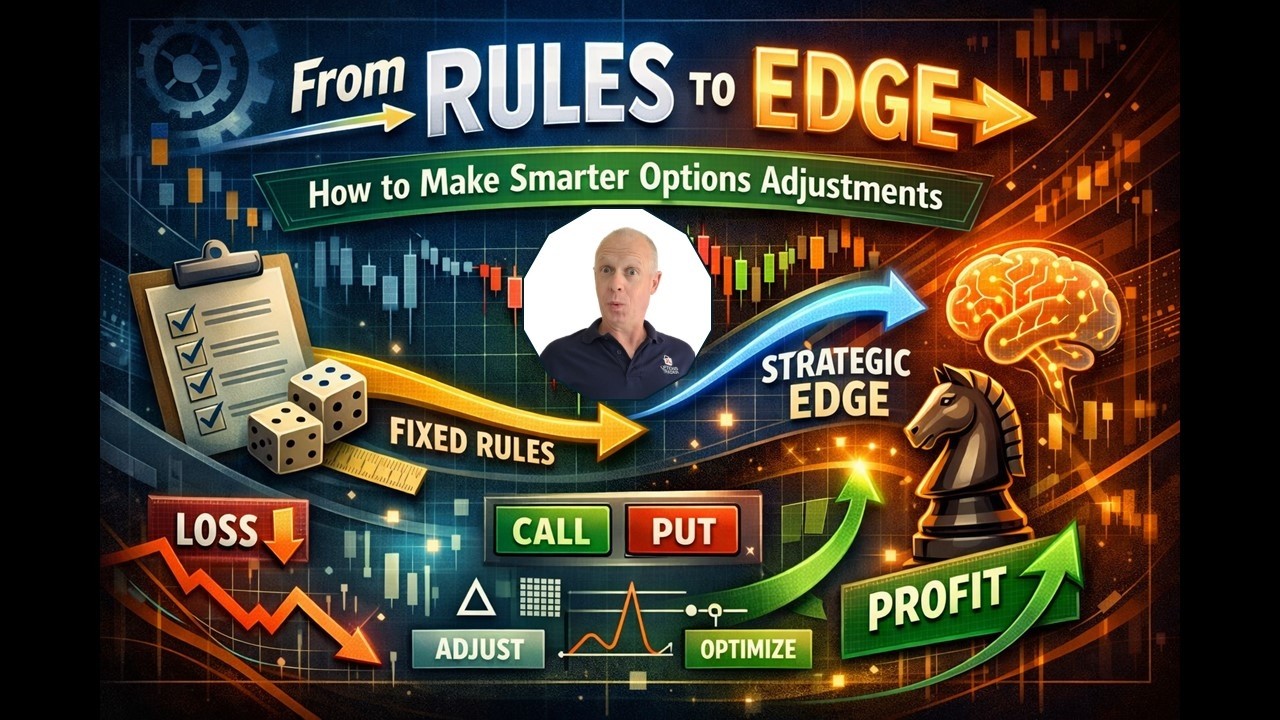
Are your options trades stuck in follow the rules and hope-mode? In this lesson from John Locke, discover how to move beyond rigid entry/exit rules and develop Stage 4 options adjustments grounded in market context, volatility, and positional reaction. Learn practical steps to manage trades better, avoid overfitting, and build the skills to make precise, high-probability decisions.
Click here or on the video below to learn more!
Subscribe: YouTube
Subscribe: Soundcloud
Why rule-based trading is a starting point — not the finish line
Beginners often rely on form fitted rules for consistency: fixed expirations, profit targets, and Delta range. Those rules may let you “earn while you learn,” but they’re often arbitrary and historically fitted. The result: decent historical performance but no guarantee going forward and limited adaptability when markets change.
What are Stage 4 options adjustments?
Stage 4 adjustments are context-driven modifications to your entries, exits, and hedges. Instead of blindly following an indicator or a fixed rule set, you consider three key metrics:
- Market context — For example: Is the market extended or likely to reverse?
- Volatility context — For example: Is implied volatility expanding, contracting, or stable?
- Positional reaction — For example: How is your specific position likely to respond to price/vol moves?
Practical Stage 4 techniques traders can use
- Delay bullish adjustments during a strong run-up — let a reasonable level of upside risk remain if continuation is unlikely.
- Allow asymmetric risk when the market’s probability of moving further is small — accept limited extra upside risk to reduce downside exposure.
- Adjust less frequently when volatility context suggests current premium will normalize rather than spike.
- Use position-specific reaction knowledge (how your butterfly, iron condor, or vertical typically behave?) to guide trade sizing and timing.
Stage 5 vs Stage 4: When to be specific
Stage 5 is about making very specific situational calls — “this candle, this level, this short-term drop, then a bounce” — which requires deep market experience and timing skill. Stage 4 sits between rigid rules and high-specificity calls: it’s generalized, probabilistic thinking based on learned patterns, not blind rules or micro-analysis.
Common mistakes and how to avoid them
- Overfitting rules: Avoid treating backtested arbitrary parameters as immutable truths.
- Premature specificity: Don’t attempt Stage 5 moves before you’ve built observational experience.
- Blindly following alerts: Alerts don’t teach much of anything useful as it relates to successful trading — To be truly successful, learn how your position behaves in real markets, learn to confidently make your own choices.
Simple habits to accelerate progression
- Trade small and keep position sizes consistent while you learn.
- Journal adjustments and outcomes — note market context, volatility, and positional reaction.
- Spend time watching markets daily to build pattern recognition (reversals, continuation zones, volatility shifts).
Quick checklist: Stage 4 adjustment decision
- Assess market direction and recent move magnitude.
- Check Implied Volatility trends and event risk.
- Estimate how your position will react to likely moves.
- Decide: modify rules now, delay, or keep original plan based on combined probability advantage.
Conclusion — trade smarter, not just by rules
Stage 4 options adjustments let you bridge the gap between rule-based comfort and situational expertise. By combining market context, volatility awareness, and positional reaction, you gain a practical edge without overfitting or chasing false precision. Build these habits, journal outcomes, and you’ll progress toward Stage 5 specificity when you’re ready.
Want more? Subscribe, journal your trades, and review how Stage 4 choices performed — then iterate.
Comment below with a trade scenario and we’ll discuss potential Stage 4 adjustments.














Leave a Reply
You must be logged in to post a comment.