

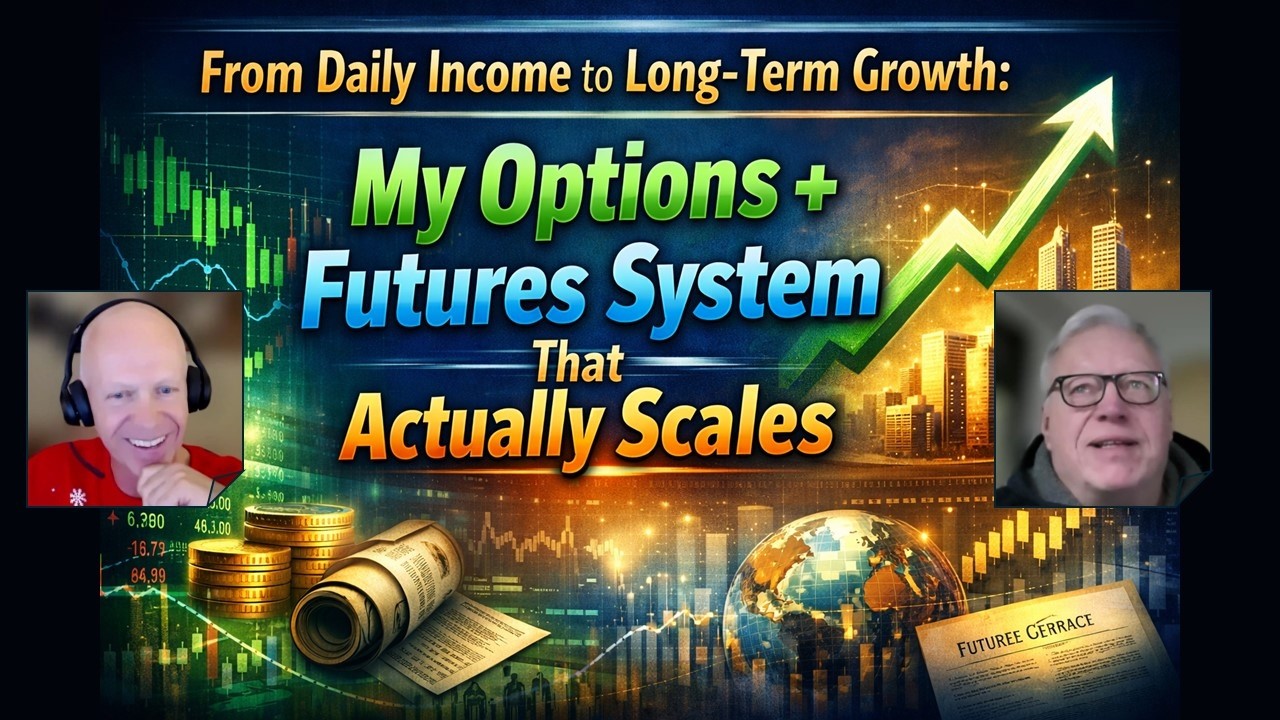
One strategy won’t sustain a portfolio long-term. Smart traders design multiple “engines” with distinct roles: steady income, capital growth, long-term stock replacement, and risk reduction. This post breaks down a practical multi-engine approach you can implement now—plus rules for compounding, trade plans, and disciplined backtesting.
Click here or on the video below to learn more!
Subscribe: YouTube
Subscribe: Soundcloud
Why One Strategy Isn’t Enough
Markets change. A single tactic can work in specific conditions but fail in others. Diversifying strategy types and timeframes reduces single-point failure and keeps you invested through varied cycles.
The Four Portfolio Engines (What They Do)
- Income Engine (short-term): Uses intraday futures, zero-DTE options (SPX0TE), and income structures like broken wing butterflies and vertical spreads for consistent cash flow and compounding.
- Capital Growth Engine (medium-term): Targets 30–60 DTE verticals in high-growth sectors (AI, energy, tech small caps) to capture swing movement and sector rotation.
- Long-Term Engine (stock replacement): Uses LEAPS on mega-cap, reliable companies (e.g., industrials) to gain long-term upside with defined leverage.
- Risk Reduction Engine (hedging): Uses futures and protective BWB positions to hedge downside risk while keeping core exposure intact.
How to Express One Idea Across Timeframes
Combine futures for precise intraday entries with options to carry positions for 30+ days. Start with a futures level, scale into option spreads, then manage the trade by levels and timeframe.
Trade Structures & Examples
- Zero-DTE & SPX0TE: Daily income and compounding via intraday flows.
- Broken Wing Butterflies: Flexible delta management and adjustability for income.
- Vertical Spreads: Higher probability setups for growth and sector bets.
- LEAPS: Stock replacement to capture long-term appreciation with limited capital.
Systems, Roles & Execution
Treat each engine as a business unit with a purpose. Design rules for entry, size, adjustments, and exits. Build simple systems so you only handle front-end decisions; execution can be routine and repeatable.
Backtesting & Reps — The Fastest Path to Improvement
- Focus on one strategy as a beginner; master it with conscious backtesting.
- Use TradingView or similar platforms for candle-by-candle analysis.
- Don’t just track P&L—observe decisions, plan responses, and log mistakes.
- Eliminate errors by identifying patterns of failure and correcting them.
Trade Plan Checklist (Daily Routine)
- Define market outlook and key levels weekly
- Identify A+ trade setups only; skip marginal plays
- Paper trade when urge to trade outweighs edge
- Review each trade: plan → execute → analyze
Conclusion & Next Steps
A multi-engine portfolio balances income, growth, long-term wealth, and downside protection. Start by mapping your current positions into the four buckets, pick one engine to optimize, and run disciplined backtests. Focus on trade plans, level-based entries, and eliminating errors to move from making money to keeping it.
Like this breakdown?
Implement one engine this month and track results. Subscribe for weekly market strategies and practical trading systems.












Leave a Reply
You must be logged in to post a comment.