

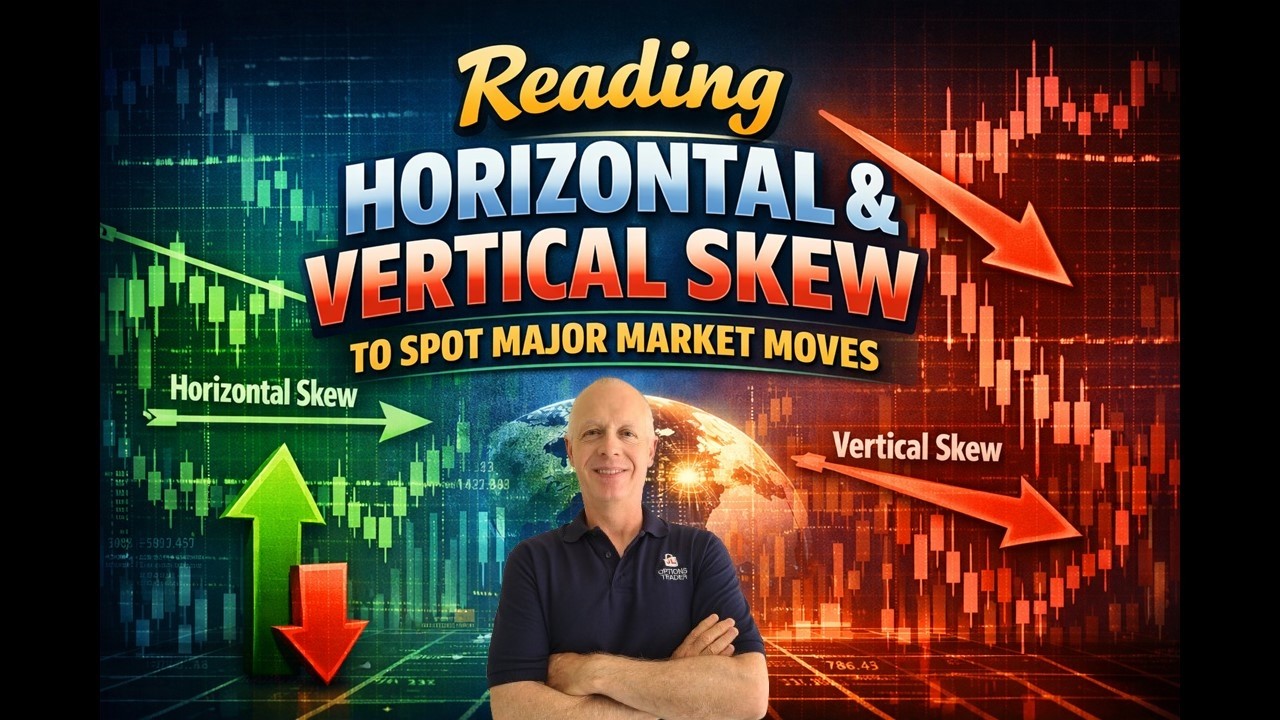
Traders: learn a practical, real-time method to interpret Implied Volatility, horizontal skew and vertical skew so you can spot potential market breakdowns or bounce failures before most people. This post breaks down what to watch, quick checks you can run in your software, and how to interpret skew shifts across indexes (NDX, Russell, Dow).
Click here or on the video below to learn more!
Subscribe: YouTube
Subscribe: Soundcloud
Why skew matters
Implied Volatility (IV) and its skew reflect market expectations and risk. Sudden shifts in horizontal or vertical skew — especially big expansions in front-month IV or moves into backwardation — often point to higher downside risk or a market that’s about to move rapidly. Traders who monitor skew get an early warning on retests, failed bounces, and volatility spikes.
Key concepts
- Vertical skew — difference in IV across strikes within the same expiration cycle (shows directional fear across price levels).
- Horizontal skew — difference in IV expiration cycle to expiration cycle (shows near-term vs. longer-term volatility expectations).
- Backwardation — front-month IV > next month IV; can signal acute near-term risk.
- VIX expansions — rapid rise in VIX or front-month IV typically accompanies large down moves.
Real-time checks you can run (fast)
- Look at horizontal skew shifts day-to-day — you don’t need fancy graphs: compare ATM and OTM IV numbers across strikes.
- Check horizontal skew (T+0 differences between months) to spot front-month stress.
- Watch for sudden jumps in front-month IV (e.g., a spike from ~50 to ~80 in one day) — that’s a red flag.
- Compare price action across indexes
- Use software or a simple spreadsheet to graph daily skew changes if you want granular tracking.
How to interpret combined clues
One signal alone is often noise. Combine:
- Price action (retests, candle structure, support breaks)
- Horizontal & vertical skew shifts
- Index breadth and multiple-index confirmation (Russell, Dow, NDX)
- Macro headlines (e.g., oil shocks, geopolitical risk)
If skew expands significantly while price is experiencing a bullish retest, the odds favor a short term downside continuation.
Conclusion
Understanding horizontal and vertical skew gives you an actionable edge. You don’t need complex charts — just consistent checks: price structure + skew shifts + multi-index confirmation. Use these signals to protect positions and find higher-probability trades when the market shows stress.
Ready to trade smarter? Subscribe for more options-skew breakdowns and real-time trade checklists.
Leave a comment: what skew metric do you track?












Leave a Reply
You must be logged in to post a comment.