

Your trade is sitting right in the tent with only days left until expiration. The profit number looks great. But what happens if the market makes one big move? In this segment from Options Trading for Income, John Locke shows how positional analysis helped him spot hidden risk in an income trade and move the tent to build a much better position.
Click here or on the video below to see all the action!
Subscribe: YouTube
What Is Positional Analysis?
Positional analysis means looking at your whole position and asking one simple question: what is my real risk right now? It is not about calling market direction. Instead, it is about understanding what a big move up or down would do to your trade, and then adjusting so a surprise move doesn’t turn into a large loss.
As John explains, this is the kind of thinking traders build as they grow. It is the difference between following rules blindly and truly understanding the trade you are in.
The Hidden Risk Near Expiration
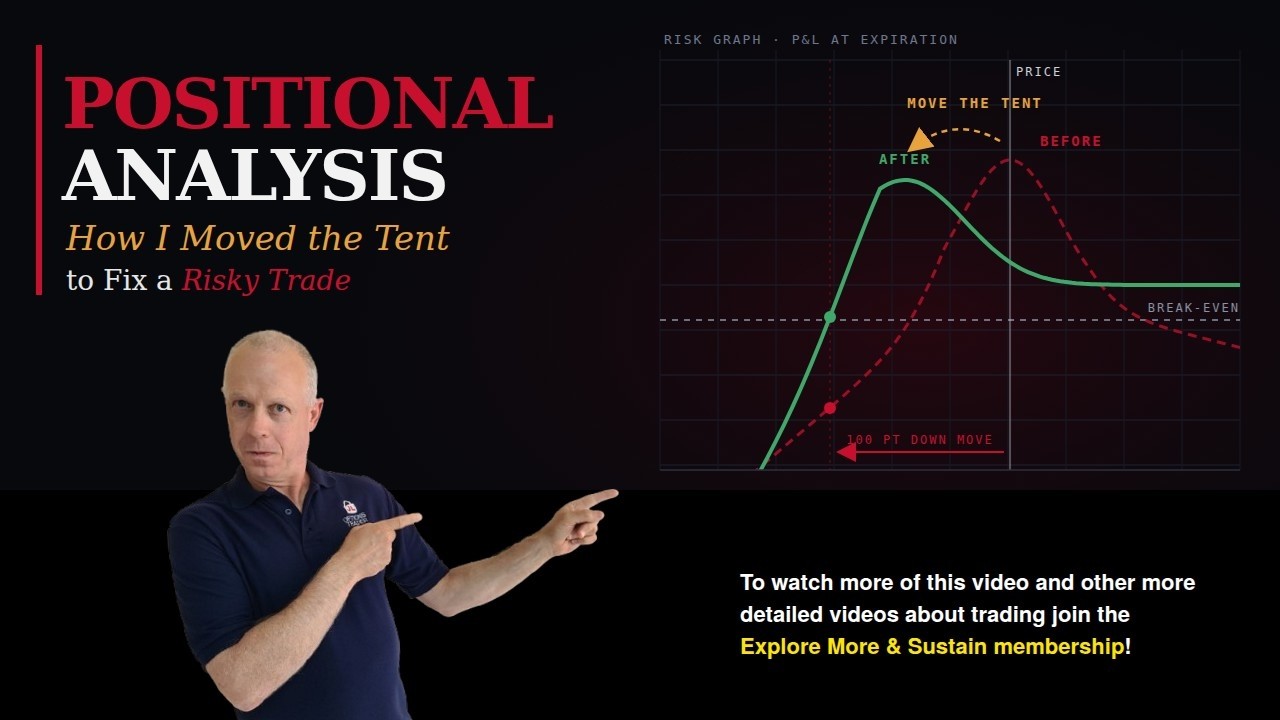
In this example, the trade was in the tent coming into expiration. That sounds ideal, but it carries real risk. A large move in the Russell could put the trade at about two times John’s exit loss trigger. A big move to the upside also carried risk. And the closer the trade gets to expiration, the faster that risk can grow.
“I’m not looking starry-eyed at the profit number. I need to understand that I’m at risk of losing this trade.”
John Locke
Many traders focus only on how much a trade could make. However, professional traders focus just as much on how much it could lose, and whether that risk is acceptable.
How Moving the Tent Fixed the Risk
To improve the position, John moved the tent. He shifted the structure of the trade while keeping his position size the same. Here is what changed:
- A big down move now lands close to break-even instead of a large drawdown.
- A big up move still produces a solid profit.
- A mild down move can actually make the trade more profitable.
In other words, the new position still has strong profit potential, but it no longer depends on the market behaving perfectly. That is the power of positional analysis.
Why Profit Alone Is the Wrong Scorecard
John makes an important point. If a risky position happens to work out, a newer trader may believe they did the right thing simply because they made money. A professional trader looks deeper. They ask whether the risk they took was reasonable for the reward. Judging trades this way helps you avoid the large losses that set traders back.
Key Takeaways for Options Traders
- Check your risk graph. Delta can make a good adjustment trigger in many cases, but it is not a reliable indicator of risk.
- Know what a big move would cost compared with your exit loss trigger.
- Use positional analysis to build a better risk profile without predicting direction.
- Moving the tent can protect against a large move while keeping profit potential.
- Judge every trade by the risk you took, not only by the result.
See the Full Trade
Want to see more of this trade and why John follows the guidelines here anyway? Watch the extended video in our Explore More and Sustain membership on YouTube.
Ready to learn options trading with up to 5 hours of live trader coaching every week? Explore the Locke In Your Success Trading Community membership. Basic membership is FREE!
Disclaimer: This content is for educational purposes only. We are not broker-dealers or financial advisors and are not making specific trade recommendations. Trading involves substantial risk, and past or hypothetical results do not guarantee future performance.













Leave a Reply
You must be logged in to post a comment.